


28 Jul What Preschoolers Learn Through Community Helpers Day?
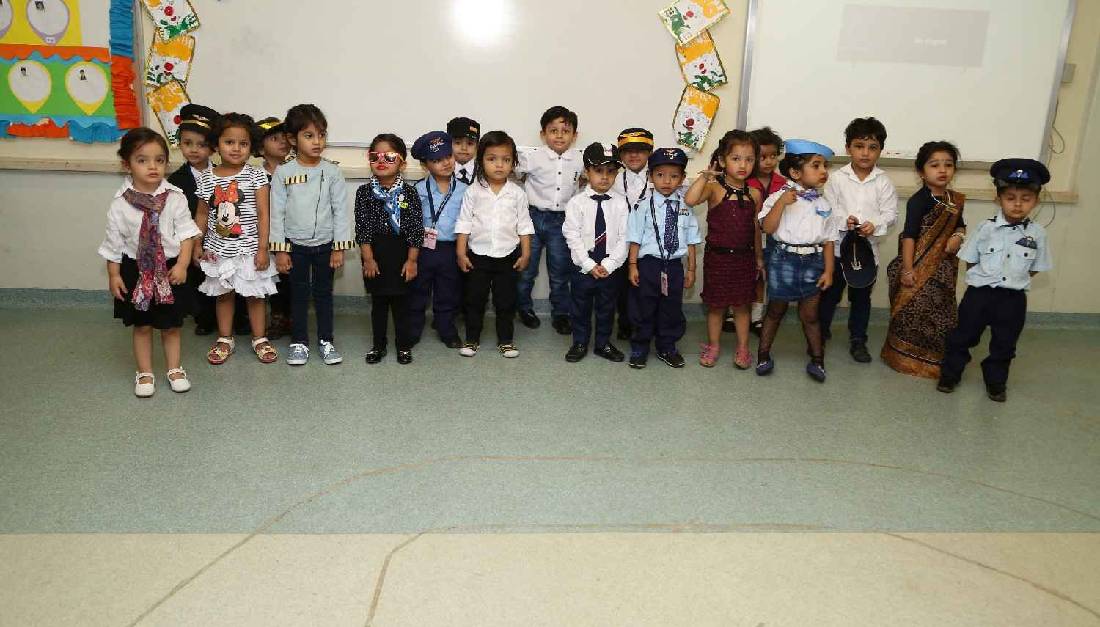
For preschoolers, Community Helpers Day is more than a dress-up event. A child may come dressed as a doctor, teacher, firefighter, chef, police officer, farmer or postman, but the real learning goes deeper than the costume. Through stories, pretend play, classroom conversations and guided interaction, children begin to understand that the world works because people help one another.
This is why community helpers’ activities for preschool are valuable in a pre nursery school environment. They help children build awareness, communication, confidence, empathy, vocabulary and social understanding in a joyful, age-appropriate way.
At MBIP Mumbai, such experiences connect with the school’s care-first approach. Children are not pushed to memorise facts. They are encouraged to observe, speak, participate, imagine and learn through meaningful experiences.
Why Community Helpers Day Matters in Preschool?
Young children are naturally curious. They notice the bus driver, doctor, security guard, teacher, shopkeeper, police officer and many other adults, but they may not yet understand their roles. A community helpers lesson for preschool helps children make sense of these everyday people.
Instead of only telling children what a doctor or firefighter does, preschool activities allow them to see, act, ask and participate. This makes learning easier because it is connected to real life.
For parents choosing a prenursery school, this matters because it shows whether learning is age appropriate. Preschoolers do not need heavy explanations. They need simple, visual, interactive experiences that help them connect classroom learning with the world they see around them.
Learning Through Role Play
One of the strongest parts of Community Helpers Day is pretend play. Through role play activities for preschool, children step into different roles and understand them from the inside.
A child pretending to be a doctor may use a toy stethoscope and ask, “Are you feeling, okay?” A child playing a teacher may pretend to read a story. A child dressed as a chef may talk about food. These moments look playful, but they build important skills.
Role play helps children develop language, imagination, confidence, listening skills, social behaviour and emotional expression. They learn to take turns, respond to others, follow simple instructions and use new words in context.
This is the hidden strength of play-based learning. Children are not only pretending. They are rehearsing real-world understanding in a safe, familiar space.
Building Confidence and Communication
Community Helpers Day gives preschoolers a reason to speak, listen, and participate. They may introduce their character, answer simple questions, sing a rhyme, join a group activity or share what their helper does.
For some children, this may be easy. For others, even saying one line in front of classmates is a big step. A good preschool understands this difference. The goal is not perfect performance. The goal is participation with comfort.
Through community helpers’ activities for preschool, children build vocabulary around people, places, tools, actions and responsibilities. Words like doctor, nurse, fire engine, classroom, patient, traffic, food, safety, help and care become easier to understand when children experience them through play.
This is especially useful in a pre-nursery school, where children are still developing speech, attention span, confidence and social comfort.
What Parents Should Notice?
For parents, events like Community Helpers Day reveal how a preschool teaches. Is the activity only for photographs or does it genuinely help children learn? Are children comfortable? Are teachers guiding them gently? Are shy children supported without pressure? Are activities simple enough for their age?
A strong preschool does not turn every event into a performance. It uses events to help children understand concepts, build confidence, and participate joyfully.
At MBIP Mumbai, activities such as storytelling, pretend play, classroom conversations, group participation, art, music and thematic learning help children connect ideas with real experiences.
Final Thoughts
Community Helpers Day teaches preschoolers far more than the names of professions. It helps them understand people, roles, kindness, responsibility, respect and cooperation. Through costumes, stories, conversations, pretend play and guided classroom experiences, children begin to see the world with more awareness.
For parents choosing a prenursery school, this is the kind of learning that matters. Young children learn best when concepts are simple, joyful, visual and emotionally safe.
That is why thoughtfully planned community helpers activities for preschool, meaningful role play activities for preschool and an age-appropriate community helpers lesson for preschool can become powerful early learning experiences at MBIP Mumbai.
FAQs
1. Why is Community Helpers Day important for preschoolers?
Community Helpers Day helps preschoolers understand the roles of people who help society. It builds awareness, vocabulary, confidence, empathy, respect and social understanding through simple, age-appropriate activities.
2. What are some good community helpers’ activities for preschool?
Good community helpers’ activities for preschool include storytelling, pretend play, dress-up, tool recognition, art activities, songs, classroom discussions, picture cards and simple role-based games.
3. How do role play activities help preschool children?
Role play activities for preschool help children build imagination, communication, confidence, listening skills, vocabulary, social behaviour and emotional expression in a playful and safe environment.
4. What should parents look for in a pre-nursery school?
Parents choosing a prenursery school should look for emotional safety, teacher warmth, hygiene, age-appropriate activities, communication, settling support, confidence-building and learning experiences that are meaningful without pressuring children.
Sorry, the comment form is closed at this time.