



26 Aug What Makes a Great Preschool? 8 Questions Every Mumbai Parent Should Ask Before Admission
Choosing your child’s first school is one of the biggest decisions you’ll make as a parent. With so many options available, it’s natural to wonder how to choose the best pre-school and what truly matters beyond colourful classrooms or impressive brochures.
The answer isn’t simply academics. According to the American Academy of Paediatrics, school readiness is built through emotional well-being, communication, relationships, and supportive learning experiences. Likewise, UNICEF emphasises that nurturing environments and responsive interactions play a vital role during a child’s early years.
If you’re wondering how to choose a pre-school, these eight questions to ask a preschool will help you make a more informed decision.
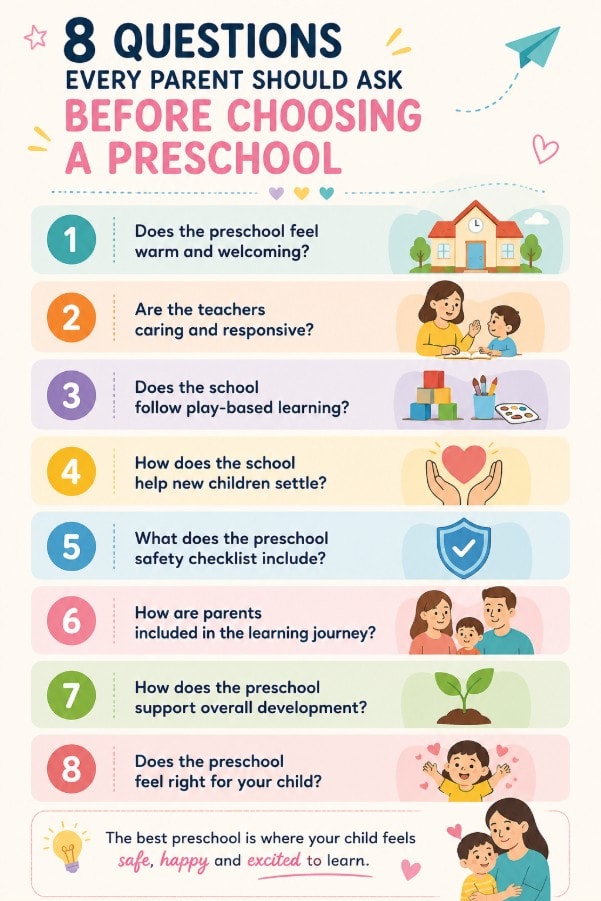
1. Does the School Feel Warm and Welcoming?
The first thing to notice isn’t the building—it’s the atmosphere. A positive pre-school classroom environment should feel calm, cheerful, safe and inviting. Watch how children interact with teachers and whether they seem relaxed, curious and happy to participate.
2. Are the Teachers Patient and Supportive?
Teachers shape a child’s first school experience. Observe how they comfort upset children, encourage participation and communicate with parents. A nurturing teaching approach often makes the transition into a pre-nursery school much smoother.
3. Is Learning Built Around Play?
Young children learn best by exploring, asking questions, moving, creating and interacting with others.
The NCERT Preschool Curriculum recognises play as a foundation for language, cognitive, social, emotional and physical development. Strong play-based learning in school helps children develop confidence, curiosity, creativity and problem-solving skills naturally.
4. How Does the School Help Children Settle In?
Every child adjusts differently to preschool. Ask how the school supports children during their first few weeks, manages separation anxiety and helps them build confidence without pressure.
Schools that prioritise gentle transitions usually create happier learning experiences.
5. Does the School Have a Comprehensive Preschool Safety Checklist?
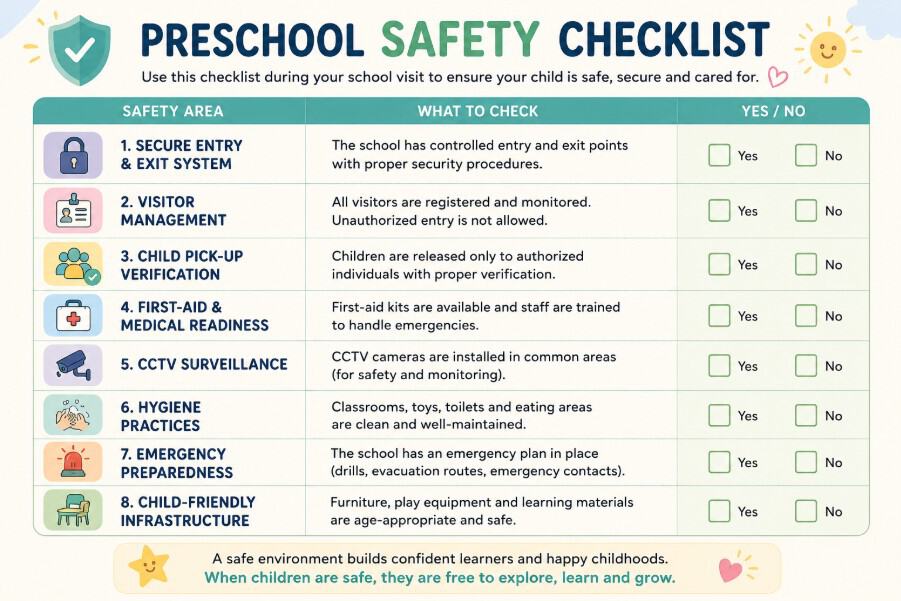
A reliable preschool safety checklist goes far beyond CCTV cameras. Ask about secure entry and exit procedures, visitor management, authorised child pick-up protocols, first-aid facilities, hygiene practices, emergency preparedness, classroom supervision and staff training.
These everyday measures give parents confidence while creating a safer learning environment for children.
6. How Are Parents Involved?
The best preschools treat parents as partners in a child’s learning journey. Ask how often teachers share updates, discuss progress and involve families in classroom experiences and celebrations.
Consistent communication helps children feel supported both at school and at home.
7. How Does the School Support Your Child’s Overall Development?
Instead of asking only about academics, ask how the preschool encourages communication, emotional well-being, social skills, creativity, independence and confidence. These are the foundations that prepare children for lifelong learning.
This question often reveals far more than conversations about worksheets or early academics.
8. Does the School Feel Right for Your Child?
Finally, trust your observations. Does your child seem comfortable? Curious? Interested in exploring the classroom? Children often communicate through their behaviour long before they express their feelings in words.
This child-first philosophy is reflected in learning environments like MBIP Mumbai, where caring educators, thoughtfully designed spaces and age-appropriate experiences help children settle naturally and develop confidence at their own pace.
Making the Right Choice
Learning how to choose the best pre-school takes time, but asking the right questions to ask a preschool makes the process much easier. Visit more than once, if possible, observe classrooms during regular school hours, speak with teachers and notice how children naturally interact with the environment.
For Mumbai parents, practical considerations matter too. A preschool that is closer to home or on your daily commute can make drop-offs less stressful, help children settle into a consistent routine and give families more quality time together.
Ultimately, choosing a preschool isn’t about finding the most impressive campus – it’s about finding the right fit for your child. A nurturing pre-school classroom environment, meaningful play-based learning in school, a thorough preschool safety checklist and honest conversations during your visit will help you make a confident decision.
Remember, the best answers often come not from a brochure, but from watching your child explore the classroom with curiosity, comfort and a smile.
FAQs
1. How do I choose the best pre-school for my child?
Start by looking beyond infrastructure and reputation. Observe the pre-school classroom environment, teacher-child interactions, safety measures and whether the school follows play-based learning in school. Visiting during regular school hours can also help you understand if the environment is the right fit for your child.
2. What questions should I ask a preschool before admission?
Some important questions to ask a preschool include:
- How do you help children settle into school?
- What does a typical day look like?
- How do teachers communicate with parents?
- What safety measures are in place?
- How do you support children’s emotional and social development?
These questions provide valuable insights into the school’s teaching philosophy and daily practices.
3. What should a preschool safety checklist include?
A good preschool safety checklist should cover secure entry and exit procedures, authorised pick-up protocols, trained staff, first-aid facilities, hygiene practices, emergency preparedness, classroom supervision and child-friendly infrastructure. These measures help create a safe and supportive environment for young learners.
4. Why is play-based learning important in preschool?
Play-based learning in school encourages children to develop communication, creativity, problem-solving, social skills and confidence through meaningful activities. It helps children enjoy learning while building strong developmental foundations for future education.
5. How do I know if a preschool is the right fit for my child?
The right preschool is one where your child feels comfortable, secure, and eager to participate. During your visit, observe how your child responds to the surroundings, how teachers interact with children and whether the classroom encourages exploration, curiosity and confidence. A nurturing pre-nursery school should help children enjoy learning from their very first day.
Sorry, the comment form is closed at this time.